Aldridge Lab 2025

Welcome to the Aldridge Laboratory:
Dr. Georgina Aldridge is a neurologist and neuroscientist who specializes in treating and diagnosing patients with neurodegenerative dementias, especially those with complex mood and psychiatric symptoms such as hallucinations, anxiety, sleep disruption or cognitive fluctuations. Diseases that produce complex symptoms include Lewy Body Dementia, Parkinson's dementia, and atypical and mixed forms of Alzheimer's disease.
Patients with neurodegenerative dementias develop aggregates of normal proteins in multiple different parts of their brains and nervous system. Our laboratory studies how these different proteins contribute to the disease symptoms people experience by examining aggregate impact on cellular and circuit dysfunction. By understanding how the cellular wiring is impaired, we may be able to treated these complex symptoms, even in people without the same disease.
One example is alpha-synuclein. This protein has long been associated with the motor symptoms in Parkinson's disease, but is now associated with hallucinations, loss of smell, dementia, imbalance, disrupted sleep, fluctuating confusion, and anxiety/depression. Is some cases it may contribute to these symptoms in Alzheimer's disease or mixed dementias.
The Aldridge laboratory uses multiple strategies to address these overarching goals:
First, we ground our ideas in patient experience and our registry research, determining which symptoms most impact quality of life and how they interact with each other. For example, we are trying to determine if disrupted sleep one night can impact fluctuations or sundowning the next day.
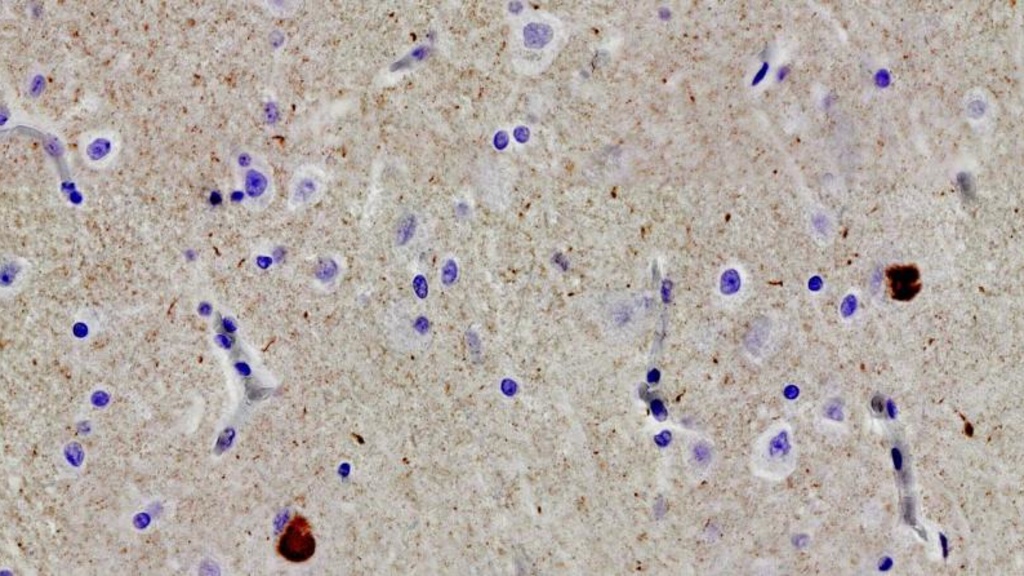
Second, we investigate what parts of the brain are associated with symptoms, symptom severity, and treatment response. We investigate pathological spread or proteins, cellular loss, and changes in cell morphology from individuals that have donated their brains the the Iowa Brain Bank.
Finally, we develop specific questions and hypotheses that can be tested in an experimental way in rodent models. Mice have the same circuits and cellular types as we do- but we can see changes occur across their lifetimes in a way that is not possible in humans and we can induce abnormal proteins in specific parts of the brain. Our laboratory uses:
- 2-photon microscopy to image neuronal structure (dendritic spines, dendrites, and axons) and function (calcium imaging) over time in living mice to evaluate how alpha-synuclein and other proteins lead to changes in cortical function.
- Stereology and confocal microscopy help us study how pathology in the ascending arousal network spreads and contributes to symptoms.
- Advanced behavioral analysis, including in-home-cage behavioral tests, let us see how how performance on thinking tasks change day to day or during different periods of the day.
These analyses in rodent models then lead to new questions to ask our patients, and the cycle starts again.
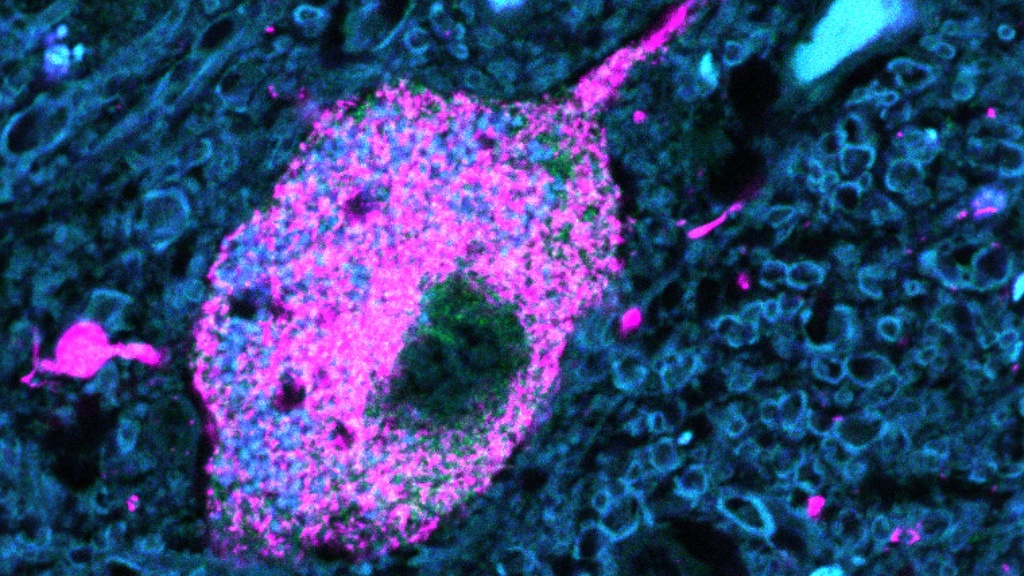
The protein aggregates in Lewy Body Dementia
This neuron, filled with phospho-synuclein (in pink) was from a donor that had Lewy Body Dementia.This cell was located in the Locus Coeruleus, a small nucleus that provides norepinephrine to the rest of the brain.
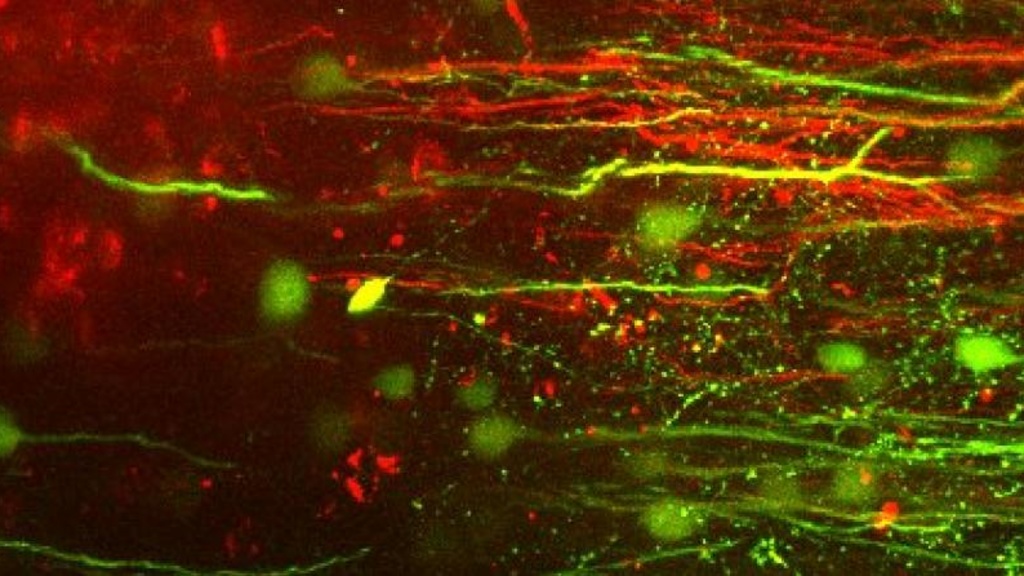
Prefrontal Apicals in yellow fluorescent protein (YFP) expressing mice.
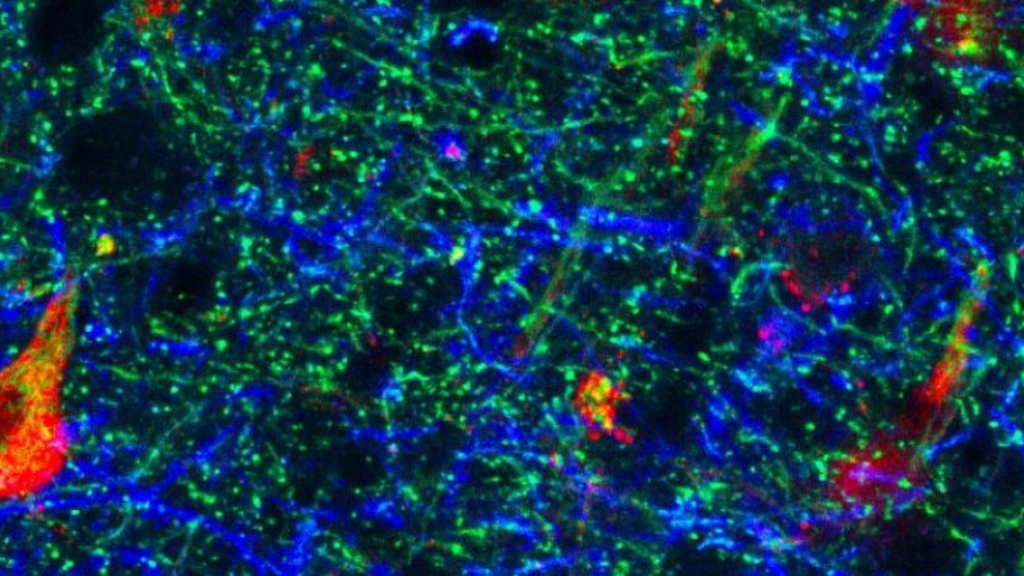
Alpha-synuclein immunostaining after viral overexpression (green)
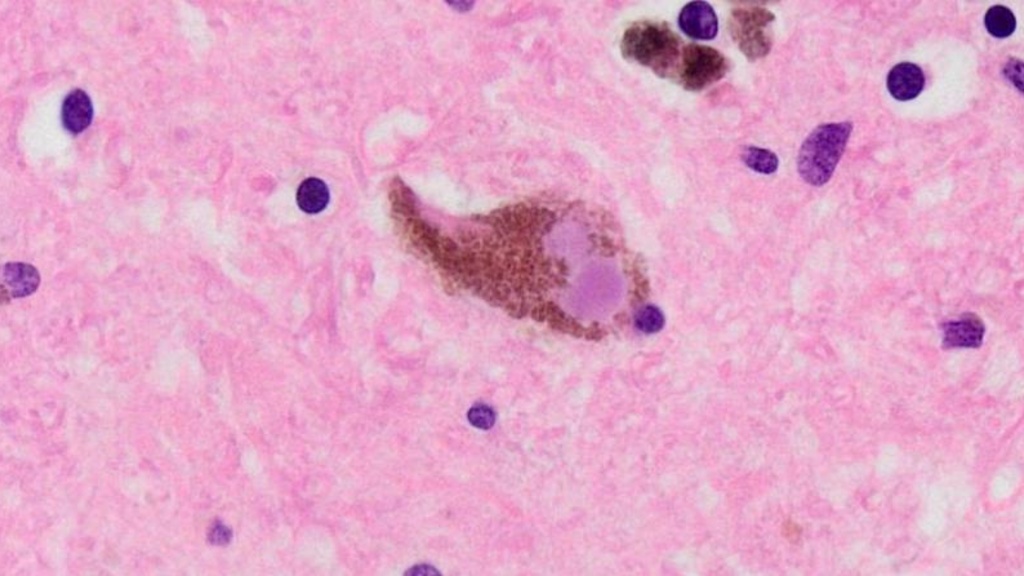
Lewy Body in subtantia nigra from Parkinson's dementia patient (pink sphere)
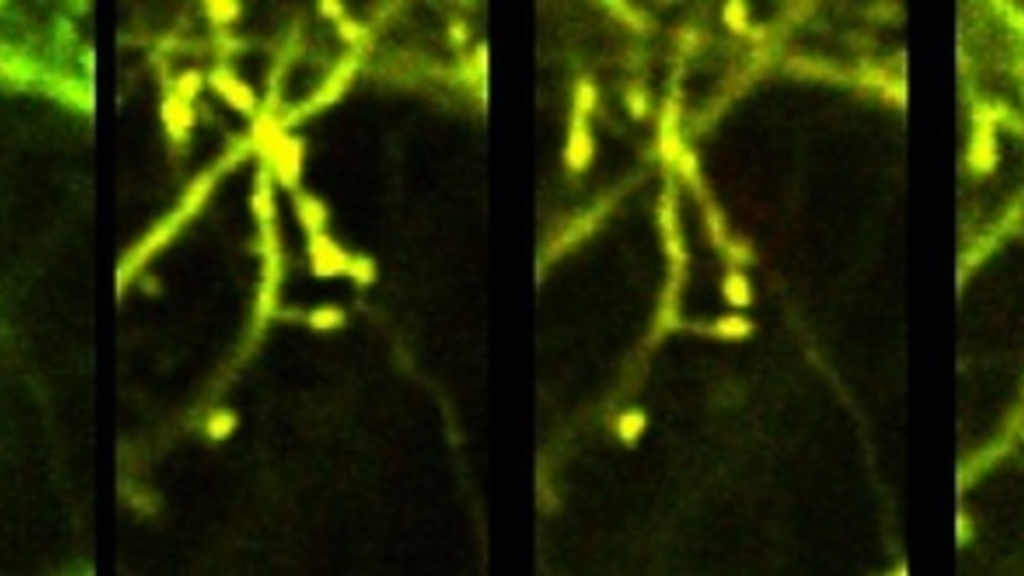
Dendritic spines and axons imaged once per week
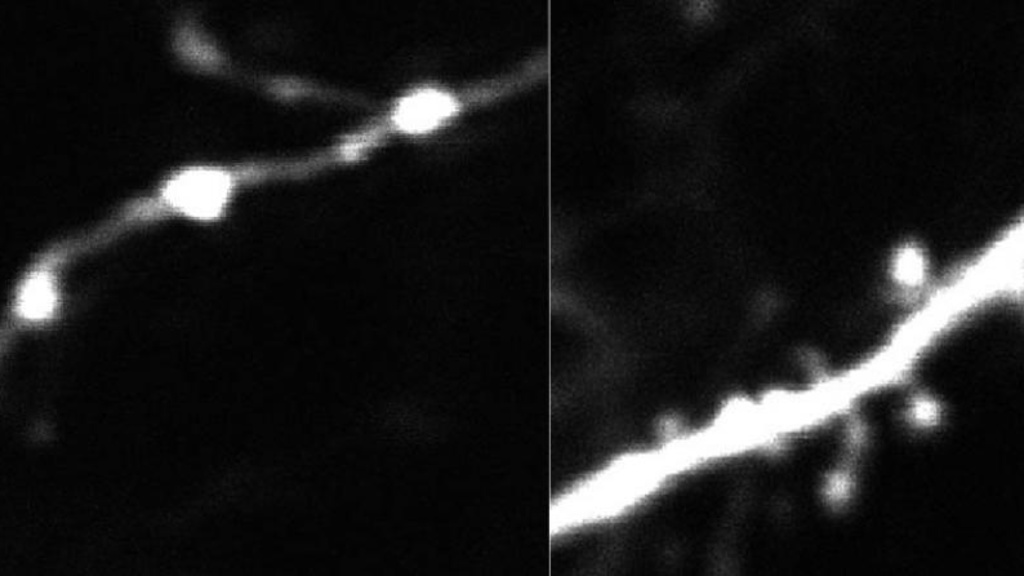
Dendritic spines and axonal boutons in vivo